François Léonce Verny was an engineer of the French navy, invited to be chief engineer for the building of the Yokosuka ironworks. He came from the École Polytechnique, one of the foremost schools in France, and had sound grounding as an engineer. He was not yet thirty when he reached Japan. That young man designed the works from which modern industry in Japan began, and spent eleven years in the country, across two governments, the shogunate's and the Meiji government's.

The engineer who was at Shanghai
The first to speak Verny's name was the French minister, Léon Roches. When Oguri consulted him about building a shipyard, Roches answered that for anything large it would be better to look for a more suitable place, and that there was a naval engineer at Shanghai named François Verny, a very able man, who could be sent for if Japan wished it — so Sakamoto Fujiyoshi's Oguri Kōzukenosuke no Shōgai (the life of Oguri Kōzukenosuke) has it. Jaurès, commander of the French squadron lying at Yokohama, also recommended Verny to take charge of founding the yard.
Ōtsubo Sadakata and Hozumi Odoroki's Oguri Kōzukenosuke sets down what Oguri did then. Having heard Roches's praise, he rode hard back to Edo, barely got the senior councillors' approval, and rode hard again to Yokohama — to ask Roches to have Verny, who was at Shanghai, brought over as early as could be managed.
Verny arrived from Shanghai in the first month of 1865. The building commissioners were settled at the same time. On the Japanese side: the senior councillor Mizuno Izumi-no-kami; the junior councillor Sakai Hida-no-kami; the finance commissioner Matsudaira Tsushima-no-kami; the commissioners of warships Oguri Kōzukenosuke and Kinoshita Kingo; and the inspectors Yamaguchi Suruga-no-kami and Kurimoto Sehei (Joun). On the French side: the minister Roches and Verny. The agreement for the ironworks, exchanged under the date of the twenty-ninth day of the first month, gives the reason for inviting him in so many words: “Verny, senior engineer, being recommended as the most accomplished in that art”.
“Unimpressive to look at, and young besides”
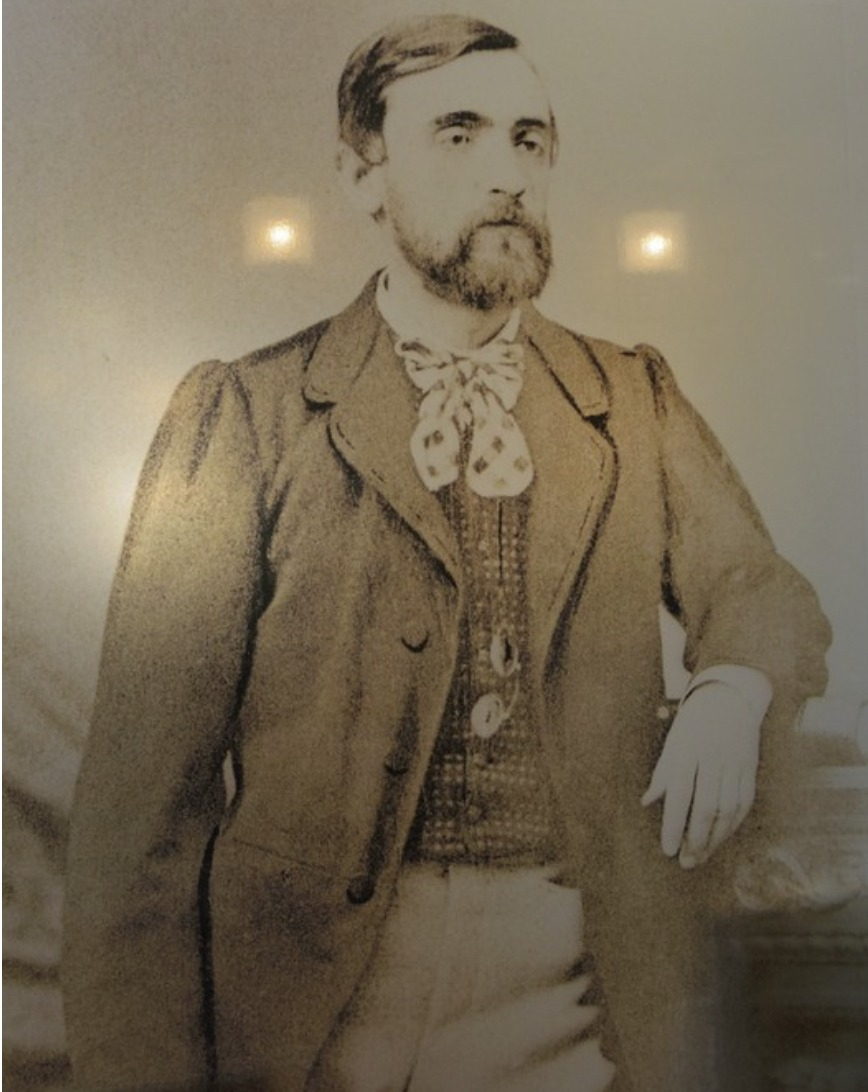
The Japanese side did not welcome him from the start. Sakamoto Fujiyoshi writes: Verny was unimpressive to look at for a Westerner, and young besides. Everyone was taken aback at first, uneasy, and made light of him — and was astonished later.
The most persistent objector was Hida Hamagorō of the warship office. Hida was an engineer who had gone to America in the Kanrin Maru, and he opposed both the Yokosuka site and Verny himself, whom Roches had sent for. At Paris the two quarrelled bitterly over what was to be done with machinery Hida had ordered from the Netherlands. Verny held that, since there was no telling whether it could be used at the Yokosuka ironworks, it should be examined again before being accepted; Hida refused flatly.
On the site too Verny argued back head on. There was no ground in Edo Bay as well suited to building a naval yard as Yokosuka. To say that, being at the mouth of the bay, it would easily be taken by an enemy made no sense: batteries and forts by sea and land could defend it well enough. As ground it was the equal of Toulon in France and Plymouth in England, if not better — he would not give up his judgment as an engineer.
Beginning with polishing the rusted machinery
The month after he reached Japan, Verny was already at work on building the Yokohama ironworks. His first task was to have a subordinate, Jinsorai, go over the whole set of steam-powered iron- and shipbuilding machinery that the Saga domain had presented to the shogunate and that had lain idle since. Some of it was rusted, and he had it polished up.
His terms were out of the ordinary. Abe Dōzan's Kaigun no Senkusha Oguri Kōzukenosuke Seiden (a true life of Oguri Kōzukenosuke, pioneer of the navy) records that Oguri treated with Verny at thirteen thousand ryō a year. The record that answers to the shogunate's register of hirings gives the date of hiring as the twelfth day of the seventh month of 1865 and the salary as ten thousand dollars a year. He stood among the very highest paid, with the physician Abachā at five thousand dollars.
“Let me build a school”
What Verny left in Japan was not the dock and the works alone. On the twentieth day of the second month of 1867 he put the following proposal to the shogunate.
The most important thing, and the one to be carried out quickly, is the organization of a school of shipbuilding, so as to train young men able to take on the great works that the government of Japan will call for one after another
The proposal was detailed. The school was to be set up at Yokosuka. Pupils were to be limited to those who had finished a school such as the French language school at Yokohama and had passed an examination. The age was to be seventeen to twenty-one; day attendance or boarding would do, but boarding was preferable. The course was to run three years, with bookkeeping added in the third. On graduating, the first and second of the class were to go to Europe and study two years more. And it could open at once with the six already there, four older and two younger — with three added by name, Tanaka Hiroyoshi, Yamataka Nobutsura and Kawai Sutekichi, who were to be given special training so as to be at work within two years.
It was the first school of science and engineering in Japan. The school kept to a few picked students throughout, and out of it came Yamaguchi Tatsuya and Wakayama Genkichi, who made Japanese warship-building something to show the world; Namura Taizō, later president of the Great Court of Cassation; and Inagaki Kitazō, a pioneer of accountancy in Japan.
His interest in training men reached to how the workmen were treated. Japanese workmen, once they had somehow become skilled in Western industrial technique, left one after another, so that only the unskilled remained; the prospect was much to be feared — so Verny lamented, and against it he advised Oguri and the others to raise the workmen's wages so that they would be glad to come and would not leave easily, and to set up grades besides, giving more pay to those whose skill had advanced and those who worked with a will.
His employer vanished, and he did not go home
In 1868 the shogunate that had hired him ceased to exist. Verny did not go home. He went on working after both the Yokosuka and the Yokohama ironworks passed to the Meiji government, and lived eleven years in Japan, until he resigned in March 1876. In that time the works went from the jurisdiction of the Kanagawa court to the ministries of finance, of civil affairs and of public works; it was renamed the Yokosuka shipyard in 1871, and came under the navy ministry in the tenth month of 1872. Through all those dizzying changes of department, he was the one who stayed on the ground.
When the Meiji emperor visited the shipyard in the eleventh month of 1871, Verny and the other Frenchmen in service were granted an audience and received an imperial rescript. In 1915, for the fiftieth anniversary of the founding of the Yokosuka naval arsenal, the arsenal's head Kuroi Teijirō issued an official paper that set Verny's services beside “the great achievement of Oguri Kōzukenosuke, who put down all objection and carried the proposal to found the yard”, and recorded that both should be handed down for ever.
At Verny Park in Yokosuka the busts of Oguri Kōzukenosuke and of Verny still stand side by side. The authors of Ōtsubo Sadakata and Hozumi Odoroki's Oguri Kōzukenosuke add that they have no memory of meeting a piece of writing that blamed Verny for anything.
Sources: Sakamoto Fujiyoshi, Oguri Kōzukenosuke no Shōgai (the life of Oguri Kōzukenosuke), Kōdansha, 1987; Abe Dōzan, Kaigun no Senkusha Oguri Kōzukenosuke Seiden (a true life of Oguri Kōzukenosuke, pioneer of the navy), Kaigun Yūshūkai, 1941; Ōtsubo Sadakata and Hozumi Odoroki, Oguri Kōzukenosuke, Oguri Kōzukenosuke o Shinobu Kai, 1975
→ The undertaking that was the Yokosuka ironworks / The Yokohama ironworks, and how Verny worked / The technical education that began at Yokosuka / The two busts standing side by side / The Meiji emperor's visit, and his rescript